Most people price their first membership by looking at what others charge, picking a number slightly below it, and hoping. Then they spend the next year wondering if it was too low. (It usually was).
There is a better way. This guide shows you how to price a membership from the value it gives, how to choose between monthly, annual and lifetime billing, and how to work out whether a lifetime deal will help or hurt you. There are worked examples with real numbers throughout.
Key takeaways
Start With Value, Not Cost
Your costs set the floor, not the price. A membership that costs you $200 a month to run is not worth $5 to members just because you have 40 of them. Ask what the membership saves or earns the member instead:
A useful rule: aim for a price where the member gets at least five to ten times the value back. If your membership saves someone five hours a month and their time is worth $30 an hour, that is $150 of value, so $19–29 a month is an easy yes.
Check What Your Market Will Pay
Value sets the ceiling; the market tells you where people expect to land. Spend an hour looking at memberships in your niche and nearby niches, and write down their prices, billing options and what is included. You will usually find a cluster, for example, most fitness libraries between $15 and $35 a month.
You do not have to be the cheapest. If you are clearly more specific (“strength training for runners over 40”) or offer more of you, you can price at the top of the cluster. Being cheapest tends to attract the members most likely to cancel.
Monthly, Annual or Lifetime?
Monthly pricing
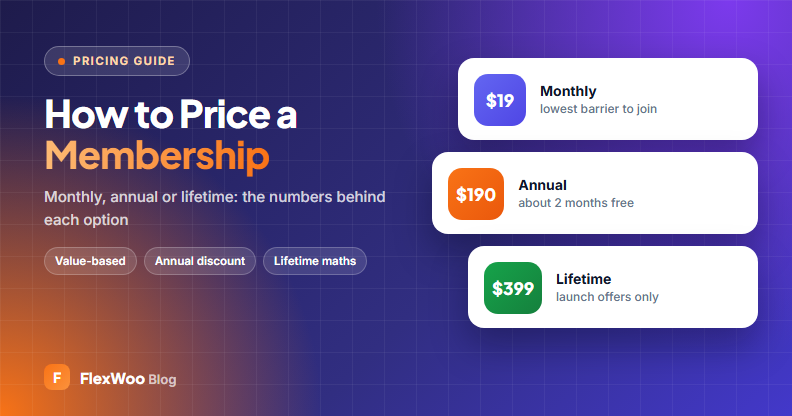
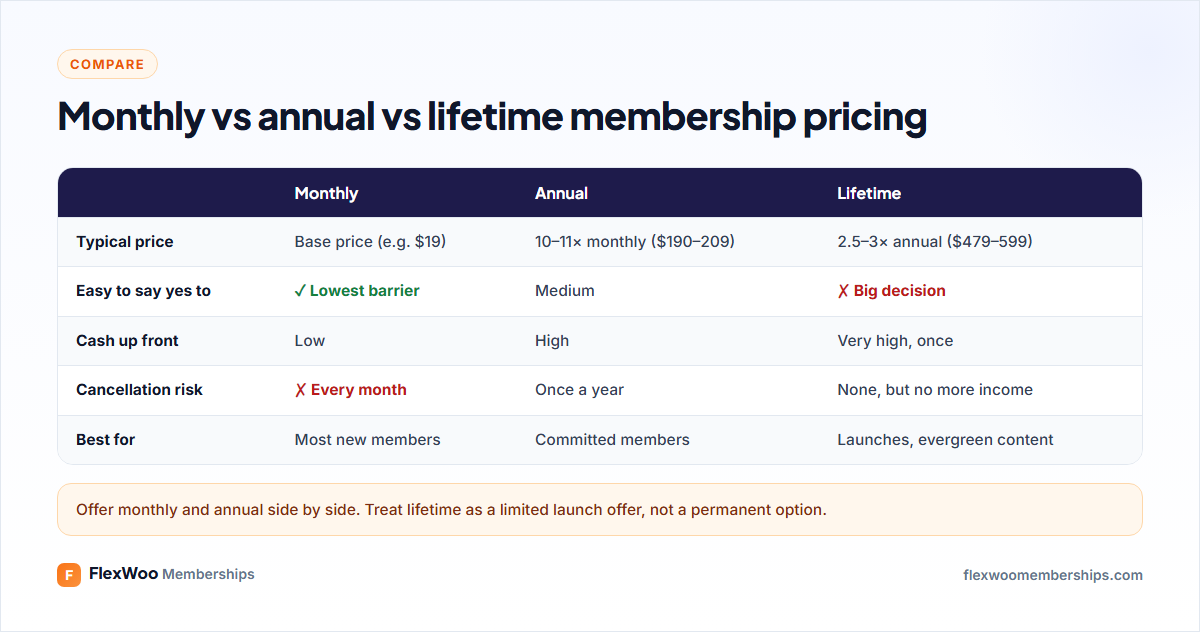
Monthly is the easiest yes. The commitment is small, so more people try it. The catch is that members decide whether to stay every single month, so monthly plans have the highest churn. Most memberships charge somewhere between $9 and $49 a month, depending on the niche.
Annual pricing
Annual plans bring cash up front and keep members for longer, because they only decide once a year. The usual approach is to price a year at about ten months of the monthly price, which you can sell as “two months free”. Multiply your monthly price by 10 or 11 and round to a clean number: $19 a month becomes $190 a year.
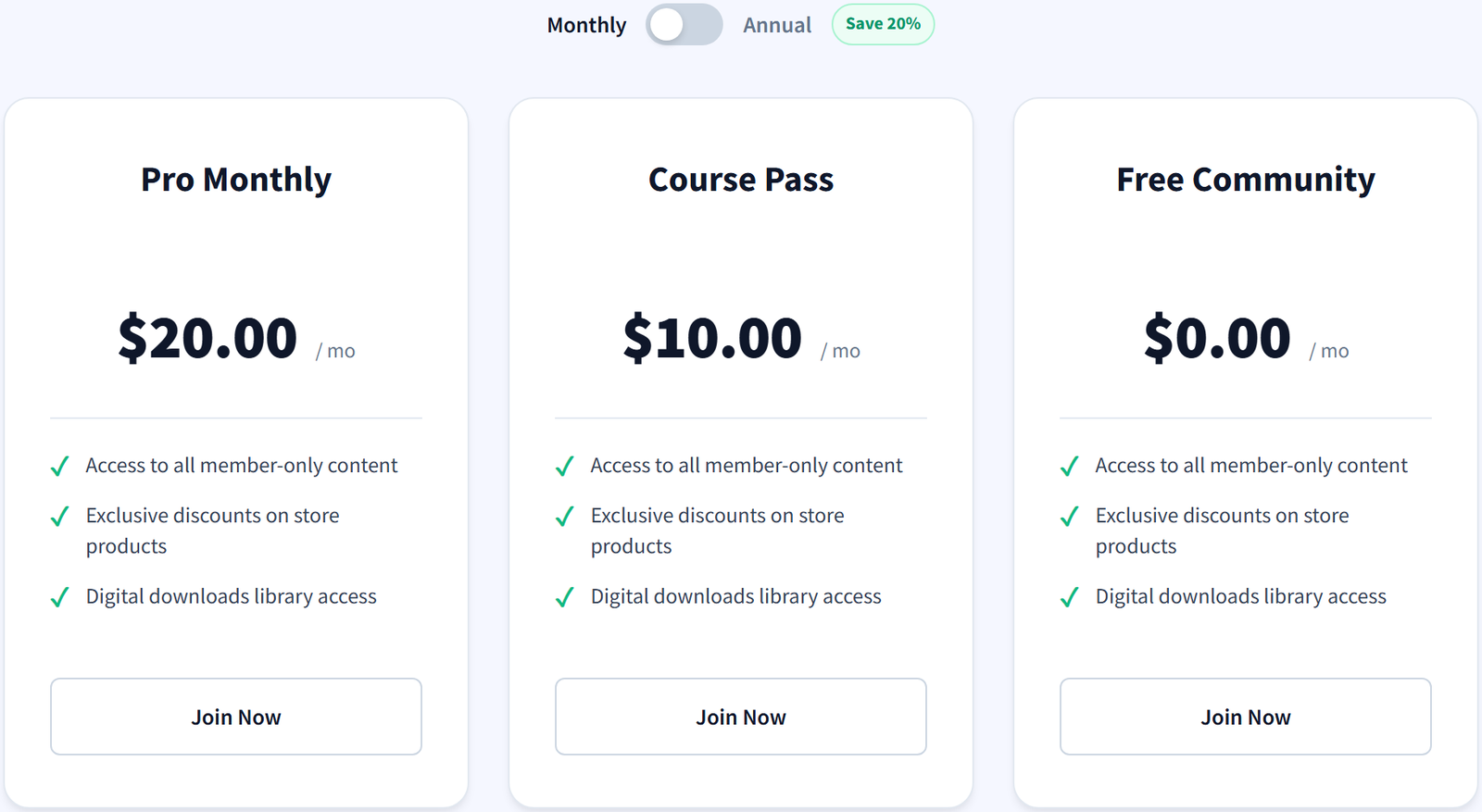
Show both options on the same pricing table with a monthly/annual toggle. People compare them, and a good share of new members choose annual when the savings are clear.
Lifetime pricing
A lifetime deal is one payment for access forever. It is great for launches and for content that does not change much, like a finished course. But it has a hidden cost: your most loyal members, the ones who would have paid you for years, pay once and never again.
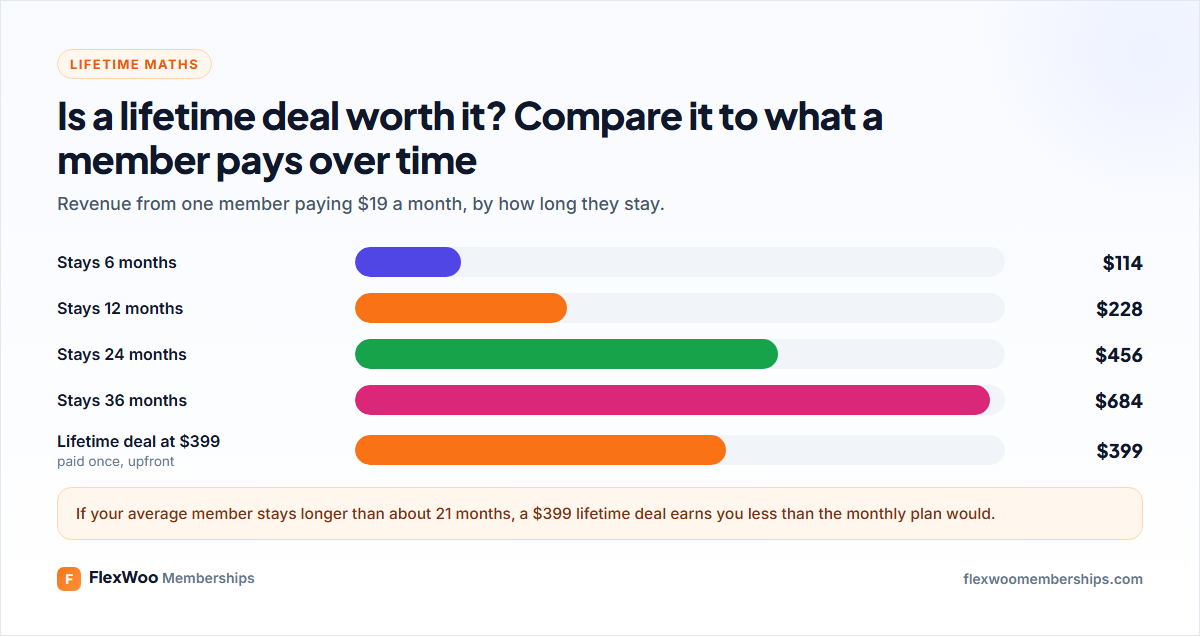
The maths above is the whole argument. If the average member stays longer than your lifetime price divided by your monthly price, the lifetime deal loses money. The common rule of thumb is to price lifetime at around 2.5 to 3 times the annual price, and to offer it for a limited time only.
A Simple Pricing Formula (Worked Example)
Let us price a membership for a hypothetical guitar teacher, Sam, who records three lessons a week and runs a monthly live Q&A.
| Step | Sam’s numbers |
|---|---|
| 1. Value to the member | Replaces a $40 private lesson a month, plus practice material |
| 2. Market range | Similar guitar memberships charge $15–30 a month |
| 3. Monthly price | $24 a month: top half of the range, well under the value |
| 4. Annual price | $24 × 10 = $240 a year (“two months free”) |
| 5. Launch offer | First 50 members get annual at $199, locked in while they stay |
| 6. Lifetime? | Skipped: new lessons every week means value keeps growing |
Notice the launch offer is a discount on annual, not a cheaper monthly price. It rewards early members, brings in cash, and does not train people to expect a low monthly price forever.
Pricing Psychology That Actually Works
How to Raise Your Prices Without Losing Members
You will probably want to raise prices once the library grows. The kind and effective way to do it:
Setting Your Prices in WooCommerce
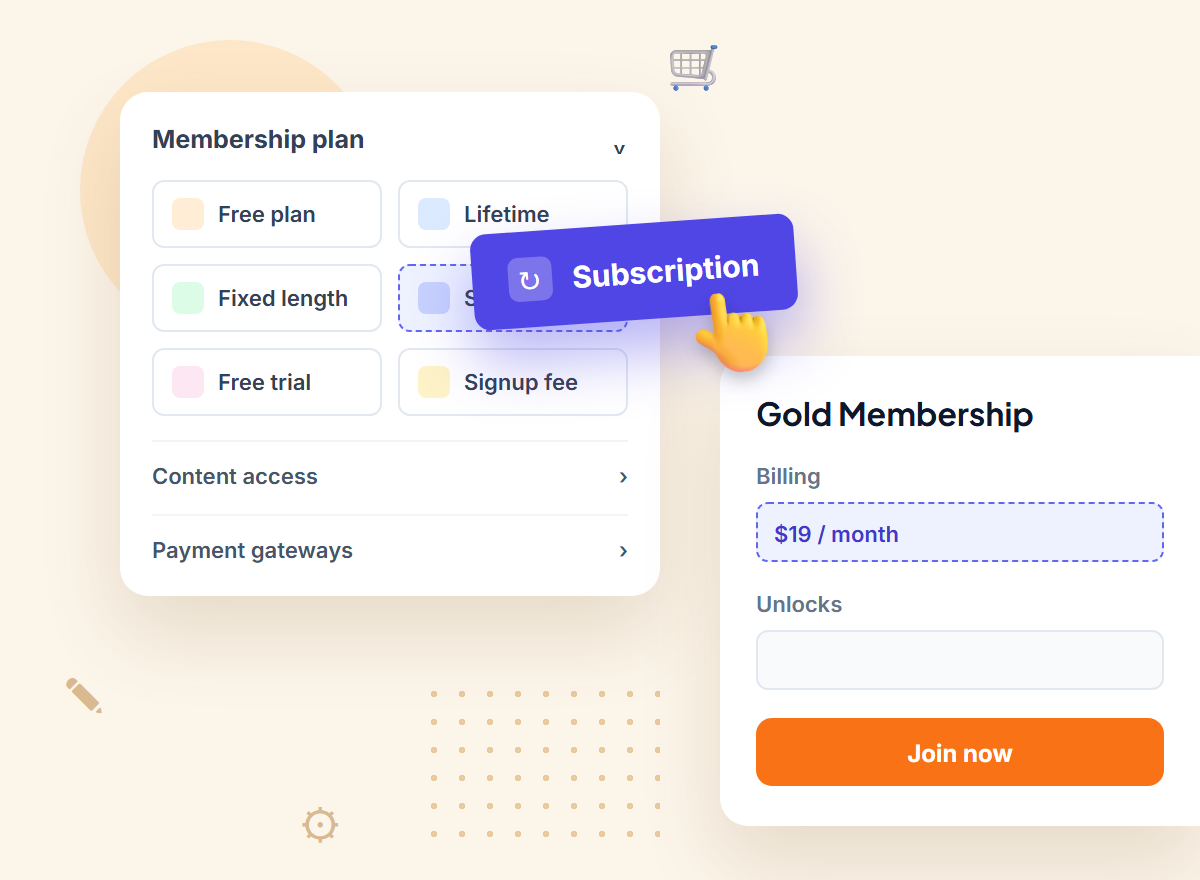
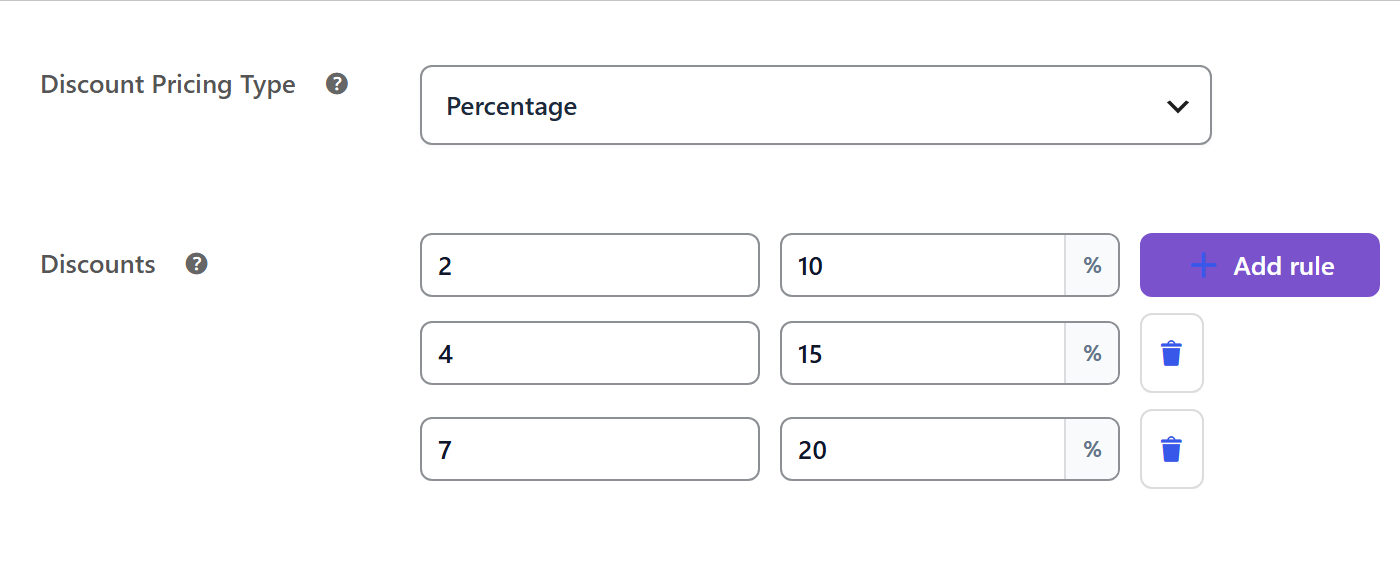
In WooCommerce, your price lives on the product that sells the membership. With FlexWoo Memberships you set the regular price and billing cycle on the product under Product data → Subscription, and you can add a signup fee or trial there too.
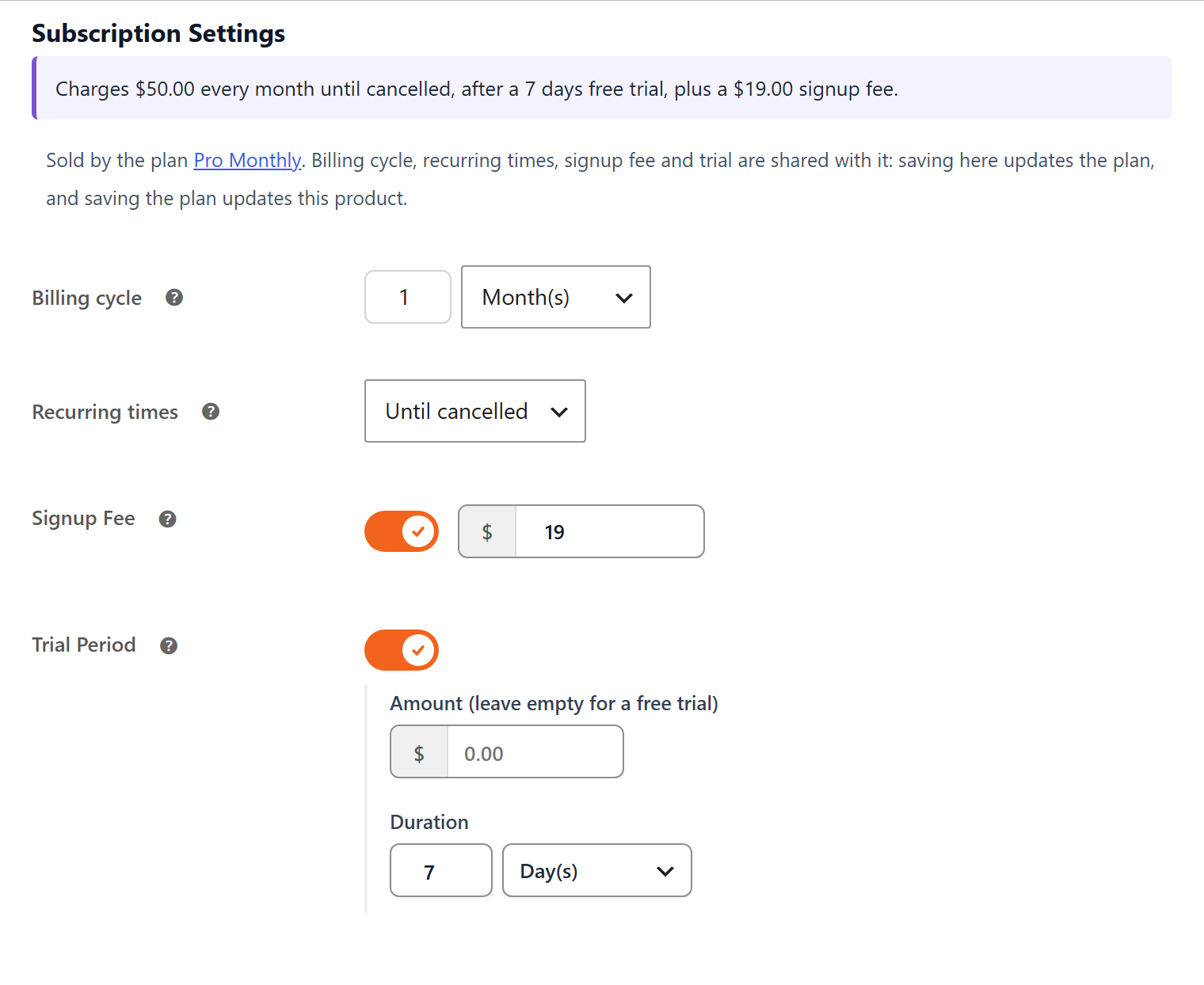
Which version do you need? The free plugin bills every 1–7 days or 1–3 weeks. Monthly and yearly billing, lifetime plans, trials, signup fees and renewal pricing need FlexWoo Memberships Pro.
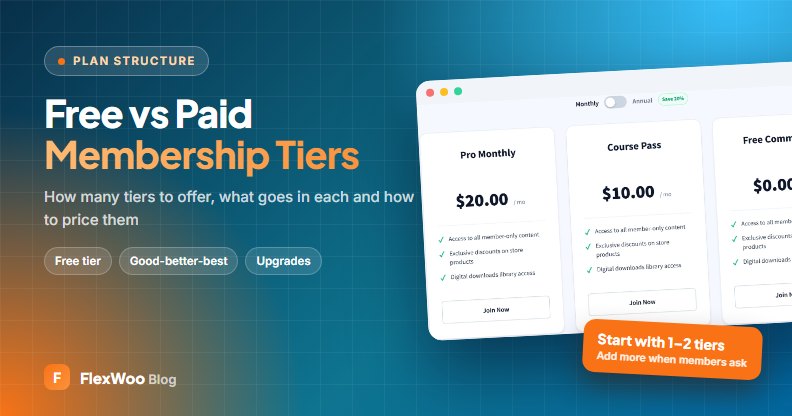
New to the setup? Our WooCommerce membership tutorial covers it from the beginning, and membership tiers explains how to price more than one plan.
FAQ: Membership Pricing
Price It Like You Mean It
Underpricing is the most common membership mistake we see, and the hardest to fix later. Price from value, offer monthly and annual side by side, keep lifetime deals rare, and reward the people who stay. You can always run a launch discount; it is much harder to undo a price that was too low from day one.